Showing posts with label Fire Breathing Toaster. Show all posts

Monday, January 6, 2014

Fire Breathing Toaster: Which Watch Should You Wear to the Dentist?

by Bill Adler

This is the last Fire Breathing Toaster Column. It’s been fun writing this column. I will be focusing my writing efforts on my books. 

Think carefully, because this precarious decision could affect you for years to come.

You may be in the mood to wear your Rolex Cosmograph Daytona or your Omega Speedmaster to the dentist, because you’re always in that mood, but that decision would be a mistake. Glancing at that Vacheron Constantin or Patek Philippe on your wrist may momentarily distract you from the unrelenting whine and whir of the dentist’s drill, but your horological comfort isn’t the only consideration when it comes to choosing a watch for your dentist visit.

The watch you want to wear to the dentist should say “Yes, I can afford you, so don’t skimp on anything important or that may involve alleviating pain.” The last message you want to telegraph to your dentist is though your Casio: “I’m of moderate means, so do what you can, and if you need to skip on Novocaine, I’m happy to save a few bucks here and there.”

But wearing your favorite, most expensive, watch sends another message that ought not to be conveyed to somebody who, with a stroke of a pen, can turn your $200 filling into a $2,000 procedure described entirely in Latin that’s eons above what you learned in eighth grade. Your diamond adorned Cartier says to your dentist, “Go ahead and charge me whatever you want. I won’t care.” Don’t wear it.

Some years ago when I went to a parents’ potluck supper at my daughter’s school. I wore my favorite watch, a gold Rolex Oyster Datejust. Why not? One should wear one’s favorite watch wherever and whenever you want. Then came the fundraising part. What?! What?!  All parents are expected to donate to the school, and the more the merrier. All of a sudden my watch was a giant bullseye: “Him! Ask him for money! He has a Rolex so he must have lots of it to spare.” Noooo. When the fundraising part of the evening started, I casually and surreptitiously moved my shirtsleeve so it covered my entire watch. I think that nobody noticed, which, was, of course, both a happy and sad thing, because what’s the fun in wearing your favorite watch if you need to hide it?

Circling back to our original problem: What’s the best watch to wear to the dentist?  Here’s where your vintage watch comes in handy: It looks good enough to say “use as much anesthesia as you think is good, and then top it off with a little more, please,” without attracting extra 0’s to your bill. A vintage watch has another advantage, too, when it comes to a place like the dentist: Your visit might take 30 minutes, 45 minutes, or, sorry to say, longer. Does your 25 year old Bulova run fast or slow? At the dentist it makes no difference. This is one place where it doesn’t matter how accurate your watch is, because time will be running at its own, less than desired pace. Sometimes it’s good not to know how long something takes.

---

Bill Adler is a writer. He is the author of "Boys and Their Toys:Understanding Men by Understanding Their Relationship with Gadgets," "Outwitting Squirrels," and a mess of other books. He’s been collecting watches ever since he stayed up until midnight to watch the date on the Timex has parents gave him change from today to tomorrow. 

__._,_.___

Monday, November 18, 2013

Fire Breathing Toaster: The Best Wristwatch for the Zombie Apocalypse

by Bill Adler

I’ve been thinking about the zombie apocalypse lately. Not what weapons to carry, or where I might get food. Or what happens if I have an accident and need surgery. But I’ve been wondering what watch to wear to survive.

This is an important question. Soon after the zombie apocalypse, most centralized time keeping services will fail, along with the rest of civilization. You won’t be able to rely on your smartphone, even if you could find a way to recharge it, the last thing you want to do is have to think when you’re escaping 100 ravenous zombies, “Damn, I forgot my phone. I have to go back.”

It’s vital to know what time it is. You want to know how much daylight remains. You want to know how many hours there are until dawn. You want to know how long you’ve been walking to get an idea of how far you’ve gone. You want to be able to meet with your group, in say three hours. Keeping track of time is important when there are zombies all over.

A regular quartz watch is out of the question for the zombie apocalypse for the same reason that you won’t be able to rely on smartphones. When the battery goes, the watch is useless. Except for solar powered quartz watches. They’ll go on forever, and that’s a consideration when it comes to choosing the right watch to be wearing when you have to bolt out of your home. You don’t want to prowl around the dark battery corners of Wal-Mart when you need to resuscitate your quartz watch. Finding food and medicine is more important.

I once thought that a kinetic watch might do the trick because kinetic quartz watches don’t need batteries, but apparently the miniature gerbils that keep kinetic watches going need to be replaced every 10 years or so. Assuming that a cure hasn’t been found in 10 years, you still want your watch to work.

I’m not entirely sure of all the criteria that one needs to evaluate when it comes to finding the best watch for the zombie apocalypse. I have no idea, really, what it would be like. The closest I’ve come is being stuck at Boston’s Logan airport during a heavy snowstorm when all flights were canceled. But I’ll do my best to provide the most useful information to prepare, based on that experience and what I’ve read.

Durability is essential. Your watch is going to take a beating. With that in mind, a mineral crystal, at least; sapphire, which is virtually scratch proof, is preferred. A titanium case makes a lot of sense, too, because titanium can take a bite and survive intact.

Waterproof, of course, is vital. You may need to leap into rivers and lakes to escape zombie herds. Not to mention the fact that you may not always have a roof over your head when a rainstorm starts.

What about complications? Complication is a watch term for those add-on features, such as alarms and chronographs. While they can be helpful in the ordinary, pre-zombie world, you don’t truly need an alarm on your watch. It’s not like you’ll be sleeping with both eyes closed, anyway. You’ll wake when you need to. Stopwatches are handy for pilots, but a sweep second hand is all you’ll need to do things like take somebody’s pulse to see if they’re still human, or if they’re about to turn.

I think that tritium or superluminova --stuff that makes your watch glow in the dark-- are good features: There will be plenty of times when you’re in the dark and want to know what time it is. Tritium and superluminova watches can also function as miniature flashlights in a pinch. Tritium never needs an external light to become bright because it’s semi-radioactive. (Tritium isn’t dangerous, but even if it was, it would be a comparatively minor danger.) Superluminova is brighter than tritium, but the brightness fades after a couple of hours. Decide on your needs --all night visibility or short-term brightness-- and choose. One more thing: There’s no way to know if zombies’ eyesight is good enough to spot a luminescent watch in the dark. If you’re worried about that, choose a watch that isn’t zombie bling.

There’s the philosophical and aesthetic to consider. The world’s going to be an ugly place, and having something pretty on your wrist might be the ticket to continued sanity. Having a watch that you like to look at can bring you out of the darkness that is fear just when you need it most. A nice Rolex, Breguet, or Patek Philippe, perhaps. Being able to see a little beauty can inspire you, maybe even give you that smidgen of creativity that you need to find your way out of danger. There are a lot beautiful watches in the world, and I wonder if that’s not the best way to go. When things are at their worst, is it not good to have something that touches your soul just a little? Should your watch be 50 percent time keeping and 50 percent sentiment?

So perhaps durable and pretty. Vintage watches may or may not fit into this category. If a watch has been running for 25 years, it might be good for another 25. Past is prologue, right? On the other hand, a mechanical vintage watch does need service every few years. It’s hard enough to find a good watchmaker in pre-apocalypse days. Imagine how difficult it will be to find one now.

The Omega Speedmaster, the original moon watch, wouldn’t be a bad choice, but it might not be the best, either. If it’s right for the harsh extremes of outer space, then it should survive the zombie apocalypse, too. The original moonwatch isn’t an automatic though, and I’d recommend an automatic watch over a manual winding watch. There may just be some days when you’re too distracted to remember to wind your watch. Believe me -- your automatic watch will get plenty of motion to keep it wound.

Right now I’m going to go with a Seiko solar dive watch. It may be the wrong choice, but there will be a lot of less than optimal choices we’ll have to make before and during the zombie apocalypse. What I like about the Seiko solar dive watch is it’s durable, really strong. A zombie bite is not going to take out this watch. It’s very waterproof, well beyond the depth any zombie can get to. It has a rotating bezel. I’m not sure that a rotating bezel is necessary, but then again it might be called into service one day. The watch is quartz, which makes it accurate, but it’s solar powered. That means no batteries to have to search for. It has bright, luminous hands. The Seiko solar dive watch also displays the day and date. It may not seem like a big deal now, but after a few months without any calendars, it might be easy to forget what day it is. I’d like to be able to do little things like celebrate birthdays and welcome in the New Year -- another year of surviving. A watch should bring with it a touch of civilization, if it can.

---

Bill Adler is a writer. He is the author of "Boys and Their Toys:Understanding Men by Understanding Their Relationship with Gadgets," http://amzn.to/rspOft, "Outwitting Squirrels," http://amzn.to/VXuLBh, and a mess of other books. He tweets at @billadler. His Fire Breathing Toaster column is published on Monday and his Tech Column is published on Tuesday.

Monday, November 11, 2013

Fire Breathing Toaster: Error-Free Writing

by Bill Adler

You have friends and colleagues like this, I’m sure. People you know who either don’t turn on spell check, ignore spell check, or who think that bad spelling and typos look cool.

Spell check makes life easier. Spell check makes giving and receiving written communication a more pleasant experience. Really, truly, it’s easier on the brain when the person who’s sending the email or who has written the report takes few moments to pay attention to spell check.

Spell check doesn't catch everything. (Though Google’s spell check for Documents is getting better and better all the time; it’s able to pick out the difference between “you” and “your,” for example, the bane of my spelling existence.)

For those times when I need to double and triple check what I’ve written I perform a simple, but highly effective task: I read out loud what I've written. Every time I’ve done that, I've spotted mistakes. Just as it’s certain that what I’ve written has typos and grammatical improbabilities, it’s a sure thing that reading out loud will catch many of those mistakes.

Here’s the scary part: I don’t always read what I’ve written out loud. It’s tiring. Sometimes I’m doing something else with my mouth, like drinking coffee or letting my mouth rest. I should read out loud. I should proof everything by simply engaging my vocal chords, because when I do the outcome is good. I wonder what I’m not catching when I don’t read out loud. Maybe I shouldn't wonder too much.

---

Bill Adler is a writer. He is the author of "Boys and Their Toys:Understanding Men by Understanding Their Relationship with Gadgets," http://amzn.to/rspOft, "Outwitting Squirrels," http://amzn.to/VXuLBh, and a mess of other books. He tweets at @billadler. His Fire Breathing Toaster column is published on Monday and his Tech Column is published on Tuesday.


Monday, October 14, 2013

Fire Breathing Toaster: Validation

by Bill Adler

Last week I wrote about the sensation that we feel when we anticipate that something might go wrong, but everything is fine. It’s the sensation we feel after passing through airport security without having our bag or body stopped for a closer look. While there’s no word for that feeling, it’s a shared experience.

I was thinking about another experience that’s fairly common, but also lacks a specific word to describe it. I’ll explain the sensation through something that recently happened to me. I was planning a one-day trip round trip between Washington and New York. The weather was bad, but at the time I needed to make my go/no-go decision, Amtrak was running fine. It was the kind of weather day when Amtrak could have experienced delays but by 10 AM, there weren’t any.

I decided not to take that trip, even though Amtrak was all clear. Still, I checked Amtrak’s service disruption page throughout the day. About an hour after I would have left, while I would have been en route to New York, Amtrak reported train delays between Washington and New York. Yes! I wasn’t happy that there were delays, but I was happy that, in the absence of incomplete information, I made the right decision. I guessed right.

I could easily have guessed wrong.

A similar situation occurs when you choose what you’re hoping to be the fastest checkout lane at the supermarket: You can only guess, or try to make educated guesses about how painful that particular line will be (is that bulge in the shopper’s pocket in front of you a wad of cash that will make checking out fast, or is it a stack of coupons that will have to be individually scanned?)

Life is often like those mystery boxes that they have at festivals and fairs: $5 buys you something, but you won’t know what that something is until you’ve expended time and cash. Often, it’s a pair of socks. But maybe today it’s a $100 gift certificate to Nordstrom’s.

Guessing is stumbling through life, but it’s what we have to do every hour of every day. When we guess right, we’re happy, but we don’t have a word for that. When we guess right in a situation where we have no right to be right, the pleasant outcome lingers for hours. “I’ll drive around the block one more time in this thunderstorm instead of taking the sure-thing space I see that’s four blocks away from the restaurant  -- maybe a parking space will appear right in front of the restaurant.” If it does appear, we’ll probably remember the parking space more clearly than the meal itself.

---

Bill Adler is a writer. He is the author of "Boys and Their Toys:Understanding Men by Understanding Their Relationship with Gadgets," http://amzn.to/rspOft, "Outwitting Squirrels," http://amzn.to/VXuLBh, and a mess of other books. He tweets at @billadler. His Fire Breathing Toaster column is published on Monday and his Tech Column is published on Tuesday.

Monday, October 7, 2013

Fire Breathing Toaster: Relief

by Bill Adler

I'm looking for a word or a few of them to describe this modern day sensation: You go through airport security --the body scanner and the bag x-ray-- and nothing beeps. Everything if fine and you're not for the next few minutes a major security risk.

The sensation you experience at the airport security merry-go-round is not unlike the feeling you get when you see the highway patrol behind you, siren screaming, lights bright. Before you have time to process the equation: "Should I pull over?" the highway patrol passes you by.

It's not too dissimilar to the feeling you get when your computer has aged 25 years in 25 minutes and you wonder, will it turn on? It does turn on! Or when you think you've lost your wallet and do a slow hand move to see if it's still being warmed by your behind...and it is.

"Relief" doesn't fully capture the emotional freedom that you feel after you've escaped airport security through airport security, after seeing the police car continue throttle full open past you, or feeling your wallet's outline against your hand.

It's a strange sensation because you're hoping that something bad --or annoying, unpleasant, or simply a pain-- that shouldn't happen, doesn't happen. All of these situations should be non-events. You should always breeze through airport security. Your wallet should always be glued in your pocket. The sensation experienced here is when nothing bad should happen, and nothing bad actually does.

During the course of a normal day, nothing bad really does happen: Pianos don't fall on our head from fifth floor windows. For that matter, pigeons don't, um, do anything to our heads either. There's no sense of relief that we've made it through the day without getting bird droppings on our head, but there is that feeling of "phew" that we didn't have to have our carry-on bag pawed through.

I don't know if these activities --passing through airport security, seeing angry police cars on the highway, not feeling our wallets for the moment-- are too fleeting to merit their own words. But I do know that I like it when me and my bag make it through airport security as if I'm just an invisible nobody.

---

Bill Adler is a writer. He is the author of "Boys and Their Toys:Understanding Men by Understanding Their Relationship with Gadgets," http://amzn.to/rspOft, "Outwitting Squirrels," http://amzn.to/VXuLBh, and a mess of other books. He tweets at @billadler. His Fire Breathing Toaster column is published on Monday and his Tech Column is published on Tuesday.
__._,_.___

Monday, September 30, 2013

Fire Breathing Toaster: A Coffee Shop in Your Pocket

by Bill Adler

A while ago I wrote about an ambient sound website, www.calm.com, that will will massage away your stress through calming sounds. There are other mood and sound websites that can attend to your spiritual and anti-anxiety needs, including Rainy Mood, www.rainymood.com, which fills your room with rain and thunderstorm sounds. It's ultra realistic and strangely serene.

Today I want to mention another website with a different sound arrangement that may suit your particular predilection: Coffitivity, http://coffitivity.com. Lately I've found myself unexpectedly productive while writing at coffee shops. My productivity boost might be partly because of the caffeine, and it might have something to do with a race against a dwindling laptop battery.

But there's something else about a coffee shop that helps focus one's mind, and that's the sound. The cacophony of voices, spoons bumping against the inside of coffee mugs, and the hiss of espresso machines make coffee shops almost magically productive places to work. But the problem with working in a coffee shop, of course, is that you're spending $5 an hour on coffee to rent the work space. (You're not buying a cup of coffee every hour or so? Tsk. Tsk.)

Coffitivity recreates the music that is a coffee shop noise and plays it over your computer's speakers. Or through your headphone. Or via an iPhone app. Give it a whirl at www.coffitivity.com, and you won't feel guilty about not paying your rent at an actual coffee shop by ordering cup after cup.

---

Bill Adler is a writer. He is the author of "Boys and Their Toys:Understanding Men by Understanding Their Relationship with Gadgets," http://amzn.to/rspOft, "Outwitting Squirrels," http://amzn.to/VXuLBh , and a mess of other books. He tweets at @billadler. His Fire Breathing Toaster column is published on Monday and his Tech Column is published on Tuesday.

Monday, September 23, 2013

Fire Breathing Toaster: Watches (Not Smart Ones) and Smartphones

by Bill Adler

There’s a connection between watches and smartphones, but not the one that immediately comes to mind. This connection has nothing at all to do with smartwatches, those silicon chips encased in plastic that we can now wear on our wrists.

The connection is an historical and philosophical one that takes a little bit of watch history to explain. (A very little bit, I promise.)

In the 1970s there was a great advance in watch technology, which came to be called the quartz revolution. Quartz watches, now cheap and ubiquitous, in one fell swoop eliminated the scene from all spy movies where one actor says to another, “let’s synchronize watches” because quartz watches were many times more accurate than the mechanical watches of the day. And they’ve only gotten better since.

The quartz revolution threatened to destroy the world’s mechanical watch industry. Why would anyone want a mechanical watch --even an automatic one that didn’t need winding-- if you could get a quartz watch that was ten times more accurate and less expensive? Some watch companies went out of business. But not all. In fact, in 2013 the mechanical watch industry is doing great.

Why? The reason is simple in hindsight, but at the time, it was a revolution in thinking. The watch industry turned their product from something that people need to something that people want. The watch industry started to innovate in ways that they couldn’t even imagine before: Watches turned into even more beautiful things, and people wanted them.

Then came smartphones, which upended the quartz watch industry. Smartphones are even more accurate than quartz watches, because they get an always-on time signal from the cell phone company. A lot of people now don’t even wear a watch at all. But people who do wear watches wear them -- enough to keep the industry making even more amazing watches. Even Swatch is making a mechanical watch:
http://www.swatchgroup.com/en/services/archive/2013/swatch_sistem51

What does this all have to do with phones? People who wear watches do so because they want to, rather than because they need to. When people look at their elegant watches they do so often because they want to see something nice, not because they want to know how many minutes it is until their next meeting. That raises an interesting, instructive question about smartphones: Do we use them because we want to, or feel that we need to? I think it’s often 95 percent feel that we need to and 5 percent want to.  We’re not even sure why we’re in constant motion with our smartphones. We’re so busy with our phones that we don’t even have time to think about them, but if we did, we’d see ourselves as a sad commentary. If you want to see yourself --ourselves-- from the outside, watch this short video: http://www.youtube.com/watch?v=OINa46HeWg8 .

The lesson learned from wrist watches is that technology is a lot better when it’s for fun, when it’s something we do because we want to, than when it’s something we feel that we have to use.

---

Bill Adler is a writer. He is the author of "Boys and Their Toys: Understanding Men by Understanding Their Relationship with Gadgets," http://amzn.to/rspOft, "Outwitting Squirrels," http://amzn.to/VXuLBh, and a mess of other books. He tweets at @billadler. His tech column is published on Tuesdays.

Monday, September 16, 2013

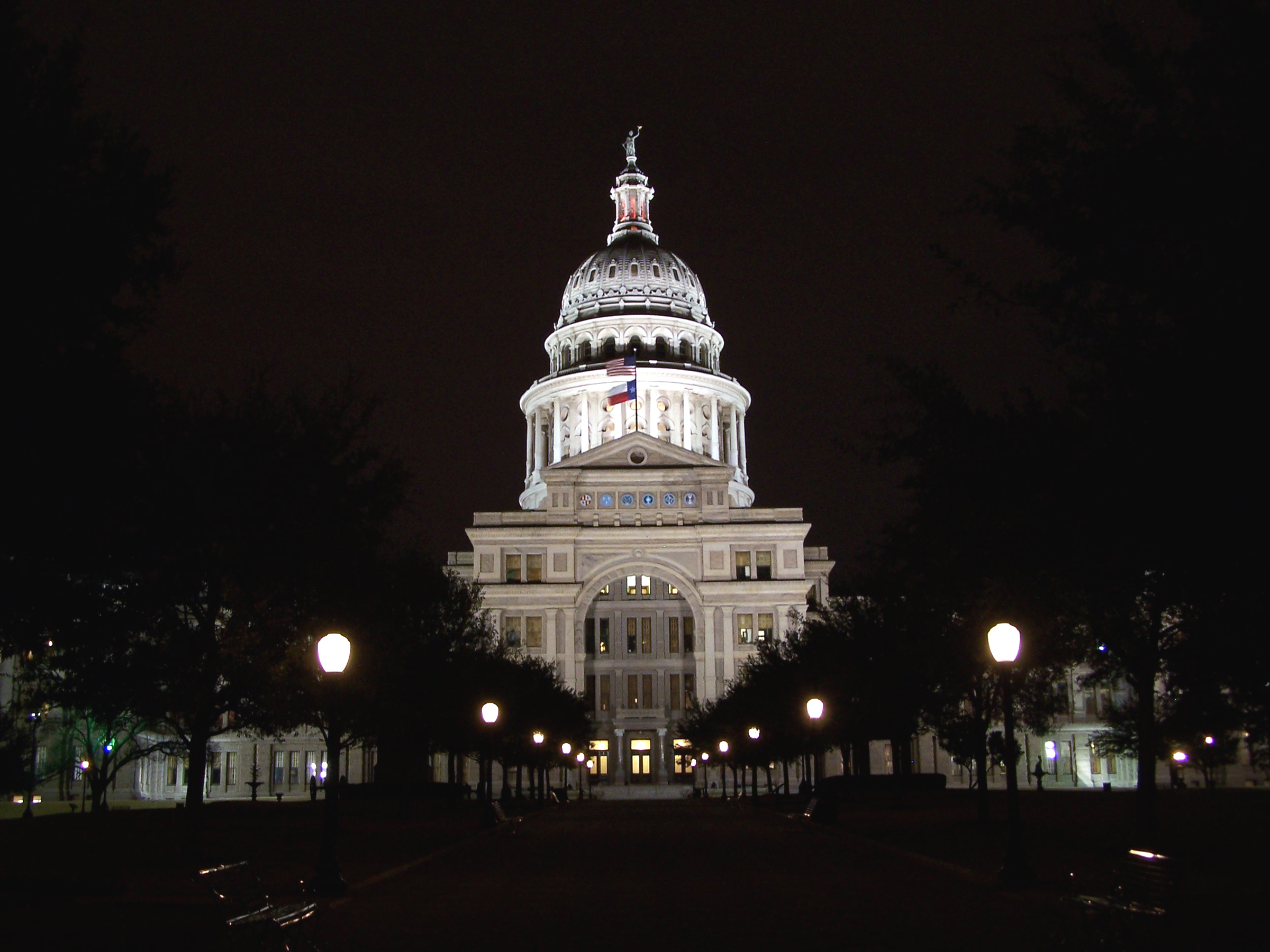
Fire Breathing Toaster: How to Fix Texas' Schools

Photo by Larry D. Moore
by Bill Adler

Texas always amazes me. It’s big. It’s rich. It’s got this progressive city called Austin, surrounded by a sea of conservatism. It’s got people who wear guns strapped to their hips, like Americans did 150 years ago. It’s got searing heat in the summer and only less searing heat in the winter.

In Texas they still want to teach creationism in biology class in public schools. There’s a big problem with that. First, evolution is true; creationism is not. The earth has been here for over 4 billion years and was not created in a week. Those are facts. That’s science.

Educators and politicians in Texas, including the governor want to promote the religious idea of creationism; they want to diminish teaching science. It’s easy to be sarcastic about this and say that it’s okay if some Americans are undereducated, or educated incorrectly, because we need people to flip burgers. But the fact is that the smarter we are as a nation, the more successful and stronger we are.

Panelists who were tasked with examining Texas science textbooks asserted that creationism belongs in science classes. Here’s how one member of the Texas panel charged with figuring out how best to educate Texas kids put things: “I understand the National Academy of Science's strong support of the theory of evolution. At the same time, [evolution] is a theory. As an educator, parent, and grandparent, I feel very firmly that ‘creation science’ based on Biblical principles should be incorporated into every Biology book that is up for adoption.” (You can read the full Huffington Post article here http://huff.to/1eDXNSj.)

They don’t mess around in Texas. They mean what they say. A lot of powerful people in Texas would like to see creationism taught in public school science classes.

Texas also buys a lot of textbooks. So as goes Texas, so may a lot of other states’ textbooks.

But you know what? As a guy who believes in science, I say let Texas require that creationism be taught in public school science classes. But only on one condition: That evolution be required to be taught in Texas’ religious schools. I can hear the cries now: “It’s unconstitutional to force religious schools to teach evolution.” Hmm. Isn’t it unconstitutional to force public schools to teach religious doctrine?

------------

Bill Adler is a writer. He is the author of "Boys and Their Toys: Understanding Men by Understanding Their Relationship with Gadgets," http://amzn.to/rspOft, "Outwitting Squirrels," http://amzn.to/VXuLBh, and a mess of other books. He tweets at @billadler. Fire Breathing Toaster is published on Mondays.

Monday, September 9, 2013

Fire Breathing Toaster: Increase Your Productivity Simply, Painlessly

by Bill Adler

I’m not a productivity maven. I don’t seek out the latest and most innovative methods for squeezing every ounce of work out of the day. I don’t mind map; I don’t multitask. I’m the kind of person who’ll say to himself, “Just one more blog and then I’ll get back to work.”

And yet I’ve uncovered and like a simple, painless and almost enjoyable way to squeeze a little more productivity out of my day, and it goes like this: Do something useful first thing in the morning. That’s if you ordinarily do something useless like checking Facebook. And then checking it again.

Instead of doing that, try this: Write something. Study something. Review something. Facebook can wait. Reading blogs can wait. Doing the crossword can wait, as can making your next move in online Scrabble.

Those things can wait. Nothing bad will happen. Instead of catching up on status updates that you won’t remember in 15 minutes, spend 15 minutes creating something. In other words, replace those wasted 15 minutes with 15 productive minutes. You’ll find that these will be among the most productive minutes of your day. Your brain won’t be cluttered with extraneous gossip, and you can focus.

Believe me, 15 minutes of thinking, creating, studying, is far easier than the other thing you thought about doing first thing: exercise. (I admire people who can pop out bed, put on running shoes and hit the trail before morning coffee.)

You may find that that first 15 minutes mental workout yields more than 30 minutes midday. It’s a good feeling, too, to get something done at the start of the day. It sets a fine tone for the rest of the day.

------------

Bill Adler is a writer. He is the author of "Boys and Their Toys: Understanding Men by Understanding Their Relationship with Gadgets," http://amzn.to/rspOft, "Outwitting Squirrels," http://amzn.to/VXuLBh, and a mess of other books. He tweets at @billadler. Fire Breathing Toaster is published on Mondays.

Monday, September 2, 2013

Fire Breathing Toaster: Simply Brilliant

by Bill Adler

In the classic thriller Marathon Man there's a scene in which Dustin Hoffman's running along the West Side Highway in Manhattan in the middle of the night, being chased by bad guys in a car. He's on foot, they're in a car, so it's only a matter of seconds before they catch him.

Thinking fast and doing just about the simplest thing he could do, Hoffman jumps across the highway's divider onto the other side, where there's no possibility that the bad guys in the car can follow.

Often, simple ideas are the best. Take the sandwich, for example. Do you want tuna or egg salad? Ham or turkey? If you want a little of this and a little of that, your only option is to buy both sandwiches and have half of each, and half of each again the next day, when they're not as fresh.

Unless. Unless you do what this bakery in Tokyo does: They offer two sandwich haves in the same pack. You can have tuna and egg salad. You can have ham and tuna. The people who run run this bakery came up with the simple and brilliant way to give people what they want.

So that's it. In keeping with the theme of this article, I'm keeping this column short and simple.

---

Bill Adler is a writer. He is the author of "Boys and Their Toys: Understanding Men by Understanding Their Relationship with Gadgets," http://amzn.to/rspOft, "Outwitting Squirrels," http://amzn.to/VXuLBh, and a mess of other books. He tweets at @billadler. Fire Breathing Toaster is published on Mondays.

Monday, August 26, 2013

Fire Breathing Toaster: Lose the Handshake

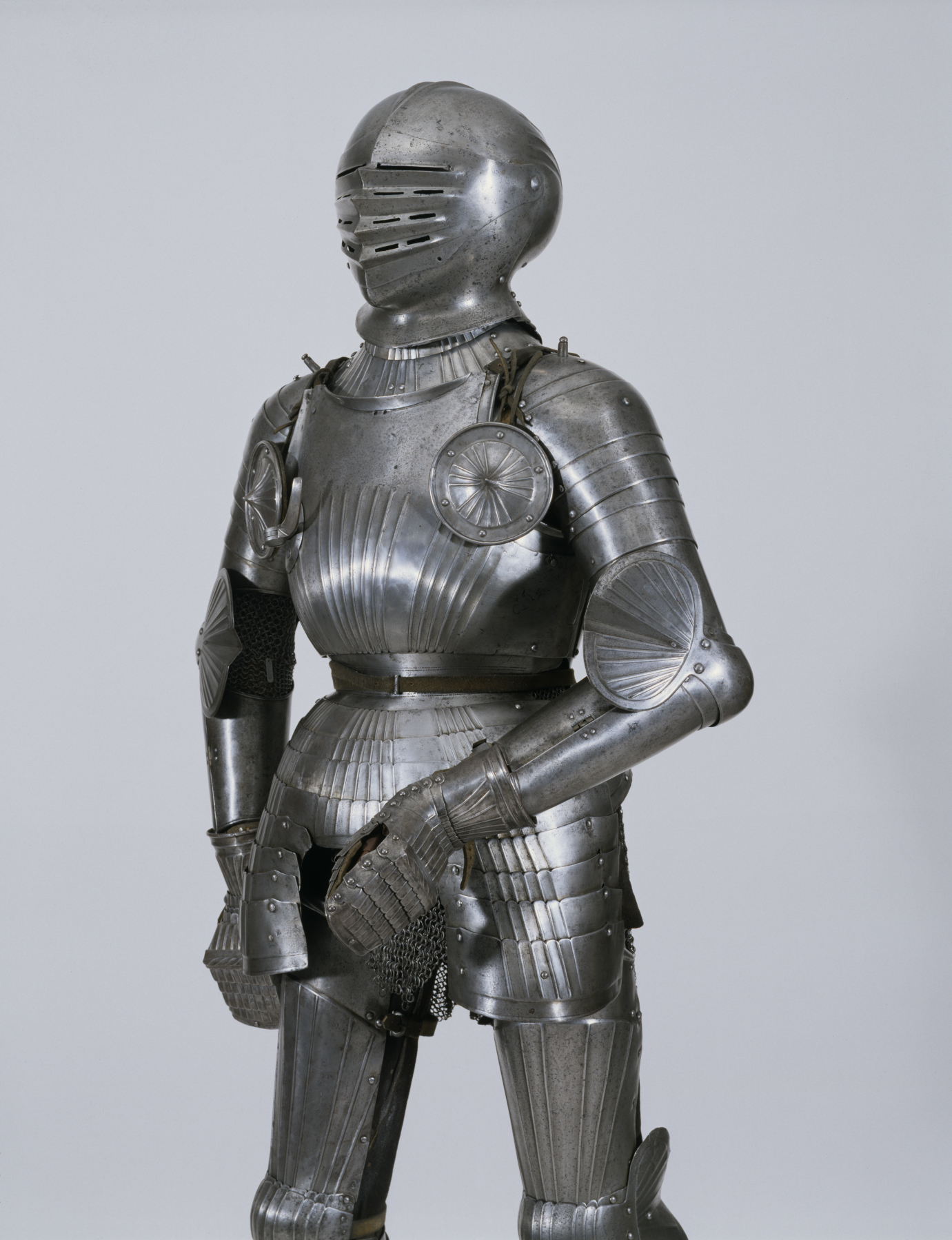
Walters Art Museum, Wikimedia Commons
by Bill Adler

The story of the origin of the the handshake goes something like this: Back in medieval times people shook hands to prove that they weren't armed. It was a way to greet somebody and show that you meant them no harm.

I don't believe that story because did one really need to shake hands to prove that you didn't have a sword or knife in your hand? The person you're greeting can see if you have a weapon well before you get close enough to shake hands. And what about the other hand where a weapon could be hiding?

Whatever the origin of the handshake, it's time to get rid of it. For one thing, germs, yes, and I'll get to that in a moment. But the main reason to replace handshaking with some other form of greeting is that the handshake is just too complicated. I came to this conclusion when I read a recent article on Lifehacker, "The Five Mistakes That Can Ruin Any Handshake," http://bit.ly/16BXp2a. Really? If shaking somebody's hand can be ruined by a grip that's too tight, involves wandering fingers, or is sweaty, then it's time to replace the handshake with something that doesn't require a manual. If you read the Lifehacker article on handshake no-no's you may even feel that it's incomplete, as I did. Add to the list: handshakes that go on too long, are too weak, or break your fingers.

How many shakes are you supposed to do? Two? Three? Till somebody's bored? Who lets go first, the alpha male? Handshaking is just too complicated.

I don't want to have to think, "Am I getting this handshake right?" when I greet somebody. Social interaction is weird enough, and the last thing I want to do is make somebody feel uncomfortable because I shook their hand wrong. The second to last thing I want is to feel like I need to towel my hands dry afterward.

And what about the germ thing? Yep, it's not a paranoid fantasy to say that shaking hands spreads germs. Just look at this one nice little statistic: According to the American Center for Microbiology, 44% of American males and 22% of American females don't wash their hands after, um, a number two. Then there are colds, influenza and other communicable diseases. A lot of people just cough and sneeze into their hands. Sure, we don't want to live in a bubble -- we can't and we shouldn't. But do you really want to shake the hand of somebody at a banquet right before dinner if that person's done a number two in the bathroom and is one of the 44 percent?

The thing about handshaking is that we don't have to. The handshake is certainly no more respectful or friendly than many of the other handshake alternatives used in other cultures, such as a bow, fist bump, or happy wave. We could even make new greetings, such as a mutual thumbs up or folding hands in front of our faces and smiling, though in my opinion bowing is the best form of greeting. Bows in movies are often exaggerated. A regular, ordinary, human being bow consists of a quick nod, perhaps from the shoulders down. But not a waist bend. A bow is easy to do, friendly, and doesn't require that you wipe the creme from a Twinkie off your hands first. The other great thing about bowing is that you can even do it over a Skype video chat. Just try shaking somebody's hand over Skype; you'll look like a dork.

Possibly the only advantage that shaking hands has over bowing or other forms of greeting is that you can teach cats and dogs to shake paws.

Germs are a good reason to not shake hands, but the even better reason is that, as Lifehacker put it, "Bad handshakes are hard to forget...Let's face it, when a handshake is improperly performed, it leaves us with negative feelings about the person who gave us that handshake."

---

Bill Adler is a writer. He is the author of "Boys and Their Toys: Understanding Men by Understanding Their Relationship with Gadgets," http://amzn.to/rspOft, "Outwitting Squirrels," http://amzn.to/VXuLBh, and a mess of other books. He tweets at @billadler. Fire Breathing Toaster is published on Mondays.

Monday, August 19, 2013

Fire Breathing Toaster: Books Be Gone

by Bill Adler

I'm in a bit of a conundrum. I love my books. I hate my books.

Let me explain. As a writer, I think books are great. Ever since I hid under a blanket in my bedroom as a child, reading books late at night with a flashlight, I've loved books.

I recently emptied out my office in an attempt to replace clutter with sanity. As part of that process I wiped my shelves clean and boxed my books. My office, virtually empty now, has an echo.

I'm not crazy about the echo (though it is interesting), but I do like the feel of open space that not having my shelves packed with books offers. Where there once was was end to end paperbacks and hardcovers there's now an open vista.

I've started to put nice things where my books used to be: the locomotive that was part of my Lionel train set when I was a kid, beautiful wooden chopsticks and a chopstick rest, a wooden box with an attractive Bulova watch inside.

I haven't put my books back. Actually, some are back -- the ones I currently use and enjoy, such as a novel that I couldn't find as an ebook, and Japanese language textbooks. I haven't put back my collection of Stephen King novels or the multitude of nonfiction books on everything from meteorology to American history trivia. And I'm not sure that I will put even most of them back. Most are never going to be opened again. I don't get a warm and fuzzy feeling from seeing "A Brief History of Science" printed on the spine of a book on my shelf. Just about anything I need to look up I can find on my iPhone faster than I could by consulting a book's index. Why keep books like this that I'm never going to touch again?

In college I took a course on Middle English. My Middle English literature book has traveled with me for decades, but why? I haven't looked at it since just before my last final exam during my junior year.

John Gardner is among the best American writers. Yet, out went my copy of Gardner's "Grendel," which I read and loved, and Gardner's "The Sunlight Dialogs," which I haven't read. I won't read "Grendel" again, I'm sure, and if I haven't read "The Sunlight Dialogs" by now, I have to be honest with myself: I won't ever read it.

Over the past year I've been expanding my collection of ebooks, mostly Kindle's, though I've dabbled in Apple's ebooks. It's an extraordinary thing to have all your books with you wherever you go -- and not take up any physical space. If I want to reread parts of a Stephen King novel because I have to stay wide awake, "The Shining" is just a couple of clicks away. And I don't have to blow a layer of dust off it before I start reading.

Technology in the way of ebooks lets you decide which physical books to keep, and which to discard. Technology lets you have more space.

My office is like a national park now. Well, not really. Actually not at all. But what I mean is that would you ever clutter up a open space like a national park with office buildings? There's beauty in open space. Open space is serene, it's calming, it's pretty. Why fill shelves with books, just because they're called "bookshelves?"

This may be one of the digital age's beneficial side effects. Those things that we kept because we couldn't think of a good reason not to, no longer need clutter our lives. I like it.

---

Bill Adler is a writer. He is the author of "Boys and Their Toys: Understanding Men by Understanding Their Relationship with Gadgets," http://amzn.to/rspOft , "Outwitting Squirrels," http://amzn.to/VXuLBh , and a mess of other books. He tweets at @billadler. Fire Breathing Toaster is published on Mondays.

Monday, August 12, 2013

Fire Breathing Toaster: Ikea, Buy a Computer

by Bill Adler

Dear Ikea,

Buy a computer. Please.

You see, I have a wait problem. So did lots of other people who stood for 45 minutes in the line at your store to schedule a delivery time. Really, standing in line for 3/4 of an hour just to schedule a time to have furniture delivered?

And yet in this age of modern miracles, where one can search for and plan a trip around the world from one's phone, where somebody can search for, customize and buy a suit in between the time when you make your morning coffee and it's cool enough to drink, and where you can actually schedule an appointment for a car inspection with the District of Columbia Department of Motor Vehicles, Ikea still makes you wait in line to schedule a furniture delivery.

As I stood in line last Friday, a sleepy end of the week in August, I thought I'd be clever and call your 800 number to schedule a delivery time. After all, my receipt said "Full Service," meaning this order was planned to be a delivery. No joy. The person behind me in line went online on his phone, looking for a way to schedule a delivery via www.ikea.com. Nope, no luck there either. So we waited. And waited. `

There was a kiosk with a terminal set up for customer suggestions, an electronic suggestion box. How wonderful it would have been if instead of a suggestion box, that terminal actually let you -- well, you know how this sentence ends.

While it's not specifically part of this suggestion, I'd like to add that prior to standing in the line to schedule a delivery time, there were two other lines that I, and all customers, had to endure: The (mercifully short) line to talk to a clerk to write up the order, and the (not so short) line at the cashier to check out.

The worst kind of line is the line you don't expect. That was the delivery scheduling line.

I understand that a lot of people who are scheduling delivery actually have their merchandise in tow, and that they need to have it removed from their trolleys, inventoried, organized and tagged before somebody can deliver it. That's why it takes about 10 minutes per customer --if they have their purchases with them-- to complete the delivery scheduling process. But then there are others, like me and the guy behind me, who just want to schedule a delivery. We don't have couches and beds that need to be hoisted off of our trolleys.

You know what, Ikea? You can have somebody with a handheld, wireless tablet scheduling deliveries while people are standing in line. Or not. Any old computer will do the trick.

---

Bill Adler is a writer. He is the author of "Boys and Their Toys: Understanding Men by Understanding Their Relationship with Gadgets," http://amzn.to/rspOft, "Outwitting Squirrels," http://amzn.to/VXuLBh , and a mess of other books. He tweets at @billadler. Fire Breathing Toaster is published on Mondays.

Monday, August 5, 2013

Fire Breathing Toaster: Cold Cereal, the Best Summer Snack

by Bill Adler

What beats ice cream in the summer?

What's better than a vanilla or chocolate cone, a cup of Haagen Daz's best? Or what's even more refreshing than a chilled can of Dr. Brown's Diet Black Cherry soda? (Hey, I'm from New York City, where Dr. Brown's sodas rock.)

The answer is cold, blended cereals. I'm not talking about a bowl of Fiber One, Shredded Wheat of some other monoculture cereal that you think will help you start out your day energized like people in television commercials.

The formula for a great summer snack is this: At least two cold cereals, blended together. Three are okay, too. Four is even more delicious. You can add Lucky Charms, Fruity Cheerios, regular Cheerios, Kashi Organic Cinnamon Harvest, Raisin Bran, All Bran (if you insist), Marshmallow Pebbles Cereal, Uncle Sam's Toasted Whole Wheatberry Flakes & Flaxseed Original Cereal (again, if you need that nod to healthy), Corn Pops, Barbara's Bakery Peanut Butter Puffins Cereal.

Cold, mixed cereal as a snack gives you an infinite variety of flavors. Forget Ben and Jerry's Chocolate Peppermint Crush or Baskin Robbins Oreo Nutty Salted Caramel Ice Cream. These are just flavor ideas that somebody in "marketing" dreamed up. When you blend your own cereals you can create flavor combination that will dazzle your tastebuds with the flavors that work magic on you. What's especially great about blended cereals is that the same four, five, or six boxes of cereals can be used to make a seemingly infinite variety of snacks, just by varying the proportions. If you run low on say Special K Fruit and Yogurt, by replacing that with a box of Kellogg's Apple Jacks, you'll have a whole new range of snacks.

Here's another thing that boxed cereal has going for it: Instead of having to rush your groceries home before it all becomes ice cream soup in the summer heat, cereal doesn't mind being transported when it's 95 degrees outside.

But wait, there's more. Cold milk is what makes this a nice, cold snack. But if you're in the mood for cold soy, add soy. There are no rules, no limitations, no set-in-stone ingredients that go into this summer snack. By all means, put fruit on top: banana, kiwi, sliced peaches, strawberry. (Here's a pro tip: Keep a bag of frozen blueberries in the freezer and pop some on top. That's what I do.) Do you like grapes? Then cover your blended cereal with those, too. Do you feel jealous that Baskin Robbins has Oreo cookies in their ice cream, but you don't have that in your cereal. Then. Add. It. Crush some cookies and sprinkle them on top. Yum.

Next time you wander through the cereal aisle, look at cereal in a brand new way: as your summer snack.

---

Bill Adler is a writer. He is the author of "Boys and Their Toys: Understanding Men by Understanding Their Relationship with Gadgets," http://amzn.to/rspOft, "Outwitting Squirrels," http://amzn.to/VXuLBh, and a mess of other books. He tweets at @billadler. Fire Breathing Toaster is published on Mondays.


Monday, July 22, 2013

Fire Breathing Toaster: Caring About AMBER Alerts

by Bill Adler

Last week I wrote about the new emergency alert system that's being added to most smartphones, whether you want it or not: http://bit.ly/17wLtyl. New smartphones and phones that get carrier software updates will automatically get three kind of alerts:

Emergency alerts, including flash floods and tornadoes Presidential alerts AMBER alerts

The software that does this is being baked into the phone's operating system itself; it's not an app that you can delete.

Your phone will make a loud noise when there's an alert, regardless of whether your phone's on silent or in "do not disturb" mode. That's right: the alerts barge right through whatever silent mode your phone is on, so that you'll get them at 3AM when you're asleep, at 11AM when you're in the middle of your annual physical, or at 9PM when you're attending a concert. You're at a wedding --maybe even your own wedding-- your phone's on silent, but the alert will still come through, and loudly. You can choose to turn off emergency and AMBER alerts entirely, but not presidential alerts. There are no halfway measures with emergency and AMBER alerts. You can't tell your phone that you only want alerts from say 7 AM to midnight or silence them during a meeting. It's everything or nothing.

I received emails saying that this is a good system: It's when you're asleep that you most need emergency alerts. Some people noted, as I did in my article, that not all emergency alerts are created equal: You don't, for example, need to know about a flash flood warning while you're safely tucked in bed.

What I want to ask about this week is this: What about AMBER alerts, www.amberalert.gov, which are urgent notifications about abducted children? Should you keep the alerts on, knowing that you might be woken at 4AM, even though an AMBER alert won't affect you personally? Should you keep AMBER alerts turned on because, if an alert comes in during the day, you might be the one who spots that missing child?

Being woken up in the middle of the night by an AMBER alert isn't one of those rare, theoretical possibilities: it happened to thousands of New Yorkers last week. Here are what two people tweeted:

"Being woken up at 4am to an emergency alert on my phone for an amber alert was one of the most terrifying things ever"

"I deadass just thought the city was under attack. I never woke up so fast to google something in my life #AmberAlert"

On the one hand, keeping AMBER alerts turned on is guaranteed to suddenly jar you into the waking world some night. But on the hand, AMBER alerts save children. As somebody else put it on Twitter during that same July 17 mass wake-up in New York:

"This morning's amber alert: If your kid was missing you'd want every phone in #NYC to violently awaken everyone imaginable."

Time is of the essence when it comes to recovering abducted children. My question to you is:  Will you turn off AMBER alerts permanently? Or should you? One New Yorker expressed his ambivalence about it in his tweet, "Mixed emotions being woken up at 4 am by Amber alert on phone." Is there are greater good that warrants our being woken in the middle of the night every now and then? What do you think?

---

Bill Adler is a writer. He is the author of "Boys and Their Toys: Understanding Men by Understanding Their Relationship with Gadgets," http://amzn.to/rspOft, "Outwitting Squirrels," http://amzn.to/VXuLBh, and a mess of other books. He tweets at @billadler. Fire Breathing Toaster is published on Mondays.


Monday, July 15, 2013

Fire Breathing Toaster: Emergency Alerts at 3 AM!

by Bill Adler

If a tweet is worth a thousand words (or even just a dozen words), then Somebody in Charge should pay attention to these tweets:

@coquettecutie A wireless emergency alert for EVERY flash flood warning? In DC? During monsoon season? Freaked me out at 3 am! How do I change?

@digitalpharaoh Ok. I really didn't need the Flash Flood Alert from the EAS on my PHONE at 4:24am. Really. I was asleep

@AnnapolisScott Cell phone Emerg. Alert at 4:30AM!  Thought maybe something serious had happened.  EMERGENCY ALERT: FLASH FLOOD WARNING ... Really @ 4:30am?

Here's the backstory: Cell phone providers, in coordination with the government, now push emergency alerts, called wireless emergency alerts, directly to your phone. Cell phone companies aren't required to do this, but, most do, including AT&T, Verizon, Sprint and T-Mobile. The wireless alert system has probably already been baked into your cell phone's software through an over-the-air software upgrade; if not, it will be soon. The alerts aren't text messages; they're a communications system unto themselves. Here's the FCC's guide to the wireless alert system: www.fcc.gov/guides/wireless-emergency-alerts-wea. The alerts originate from a local emergency management agency, not from your cell phone company.

There are three kinds of alerts that can be pushed to your phone: AMBER alerts about missing children, emergency alerts relating to public safety and life-threatening emergencies, and Presidential alerts. You can turn off AMBER alerts and emergency alerts, but not Presidential alerts. The wireless alert system is aware of your location through your phone's GPS, so you receive only those alerts that affect where you happen to be. Alerts flash on your phone's screen and make your phone emit a loud, screeching sound.

So far, so good. Fast forward to July 12, 2013. Depending on your exact location, between roughly 3 AM and 4:30 AM, tens of thousands of DC area phones woke tens of thousands of people up from a deep sleep to alert them about a...flash flood. I received two alerts that morning, one at 12:15 AM, the other at 3:09 AM. The alerts arrived even if your phone was set on "do not disturb." They arrived even if your phone was set to *silent.* Writes one Twitter correspondent, @msbathgate, "Whoever allowed the National Weather Service to send an alert to my phone overriding the silent mode should be fired on the spot."

A flash flood is dangerous, but not if you're in bed at 3 o'clock in the morning. (Nationwide, approximately 99 people die a year in flash floods.) Flash flood warnings happen frequently in the Washington, DC area, too.

So what's going to happen now? A lot of people --including me-- are turning off their alert system entirely. (On the iPhone, go to Settings/Notifications/Government Alerts and slide to off. Blackberry and Android users look here: http://bit.ly/12JaoLn.)

The wireless alert system could be a great idea. It's so much better than air raid sirens of days gone by: Who knew if the siren was a test or if the end was nigh? It's much better than television alerts, because a lot of people aren't watching TV when there's an emergency. It's better than an email system that you can sign up for, because if you happen not to check your email, you'll miss the alert. But the FCC and cell phone companies' wireless alert system is going to go the way of smoke detectors that beep low batt in the middle of the night, unless they figure out a way to make alerts smarter -- as in don't wake tens or hundreds of thousands of people if it's not a real emergency for them. People disconnect their smoke detectors when they sing the low battery song at 3 AM, never to put a new battery back in. Let's hope that the makers of the new cell phone emergency alert system don't cause people to turn off their emergency alerts and never turn them back on again. In other words, real emergencies only, please.

---

Bill Adler is a writer. He is the author of "Boys and Their Toys: Understanding Men by Understanding Their Relationship with Gadgets," http://amzn.to/rspOft, "Outwitting Squirrels," http://amzn.to/VXuLBh, and a mess of other books. He tweets at @billadler. Fire Breathing Toaster is published on Mondays.

Monday, July 8, 2013

Fire Breathing Toaster: DC Switches to Celsius

by Bill Adler

In an emergency effort to reduce electricity consumption during this heat wave, the Washington Metropolitan Council of Governments will be making all future weather announcements and forecasts in Celsius rather than Fahrenheit, Maxine Roberts, WMCOG spokesperson announced today.

This is the hottest June in 50 years and electricity use is at an all-time high. "By converting to Celsius, people will perceive a lower temperature and not feel like they have to turn their air conditioning up so high," Roberts said. "97F is 37.1C, for example. Even 90F, which often feels hot, especially if you're a transplant from New Hampshire, is only 32.2 Celsius. 'Mind over matter' matters when it comes to heat and humidity. Everyone here knows that visualizing icebergs, thinking about cool waterfalls, and seeing a lower thermometer reading in your mind's eye is all you need to feel better in this heat."

Roberts pointed out that there are several additional advantages to converting from Fahrenheit. "Because Celsius is a one syllable word, it's easier to spell than Fahrenheit," she said.

Roberts also noted that using Celsius is part of DC's "Go Metric" campaign. "We have an added incentive to put ourselves in sync with the rest of the planet when it comes to measurements." She added, "Americans who travel to other countries will be grateful that they finally know Celsius."

"This will probably become a permanent change," Roberts observed. "We considered making a twice-a-year switch between Celsius and Fahrenheit to coincide with the daylight saving time clock change, but it makes sense to go metric and stick with that." She acknowledged that the DC City Council could override the WMCOG's decision and use either Celsius or Fahrenheit, but that would make things very confusing if other jurisdictions stuck with Celsius. "It would be worse than living in Arizona, which doesn't observe daylight saving time at all, and is, for that reason, disconnected with the rest of the nation."

The Washington chapter of the Sierra Club applauded WMCOG's move toward Celsius. "We're in favor of anything that gets people to conserve energy," said Whit Greenacre. "At the Sierra Club, we've been using our imaginations for decades to pretend we're someplace else."

---

"DC Switches to Celsius" was originally published as a fake news story on the Cleveland Park Listserv, www.cleveland-park.com, in the summer of 2010. It's even hotter in 2013, so we thought we'd reprint this to help everyone feel cooler.

Bill Adler is a writer. He is the author of "Boys and Their Toys: Understanding Men by Understanding Their Relationship with Gadgets," http://amzn.to/rspOft, "Outwitting Squirrels," http://amzn.to/VXuLBh, and a mess of other books. He tweets at @billadler. Fire Breathing Toaster is published on Mondays.

Monday, July 1, 2013

Fire Breathing Toaster: First Class on Amtrak

by Bill Adler

I'm lucky. I got bumped up to first class last week.

That's the good news. The less-than-good news is that it was first class on Amtrak's Acela, not on an airline. But first class was going to be better than regular class (or as Amtrak calls it on the Acela, "business clas"s) so I decided, why not?

Here's what I think. Maybe next time I'll take regular business class.

First class on the Acela has its own car, which means that other passengers don't have to do that sheepish perp walk on their way to regular class, as they do on airlines. That's too bad for Amtrak because if they could make regular people parade through first class like paupers on their way to their seats, next time more people might want to pay for first class.

Speaking of seats, I was excited to find that Amtrak's first class has individual seats, all by themselves. That's a nice touch: If you board early you can snag a seat that's not attached to any other seat, and that's exactly what I did. Except. Except that for some weird reason, these individual seats don't recline as far as double seats. Huh? What the deal with that? After trying several individual seats to make sure that it wasn't a problem with just one seat, I switched to a regular two person seat.

In Baltimore, another passenger joined me -- the train was crowded by then. I was lucky. Lucky because I was seated next to one of those frequent travelers on his way to New York City, who had Very Important Phones Call to Make For the Rest of the Trip. You see, unlike Acela's business class, which has a quiet car for those who want to take a break from cell phone chatter, in first class anything goes. Because passengers in first class have a lot of Important Business to conduct, there's considerable cell phone chatter going on that you have to listen to. And it's not even the good stuff like "Aunt Margie went into rehab last week..." It's more of "Our plans to invade Libya will be set into motion on Tuesday..." Sigh.

Don't get me wrong. First Class on Amtrak does have plusses. For one thing the food's okay. If you're acquainted with Amtrak's usual haute de microwave, you'll find the first class menu, with a selection of two hot dishes brought to your seat, along with your beverage of choice, a step up. I liked having not to balance my food while the train hurtles down the track at 75 miles per hour. Food service is attentive: When you're done, an attendant magically appears to take your food away. And there's a linen napkin.

What else is different between business class (the only other class on the Acela) and first class? Not much else. Both have wifi and electricity at every seat. First class and business class board at the same time. (Perhaps Amtrak should take another lesson from the airlines and board first class passengers first, if they want to get more people to travel first class.)  It's the luck of the draw in both classes when it comes to whether you're sitting alone or next to a chatterbox.

Amtrak has an excellent smartphone app. I've used it countless times in a taxi on the way to Penn Station: You can reserve and pay for a ticket while winding your way through the maze of Manhattan traffic.

I actually do like the train, no matter what class of service. It costs more than the bus or driving, but it's faster and more comfortable. The train is less expensive than flying and, the hassle-to-distance ratio of flight between Washington and New York doesn't make flying worth it for such a short trip. I only wish our beloved Congress --the Congress that represents all Americans except for DC residents-- would decide that a fast, modern, goes-everywhere rail network was worth spending money on. Because it is.

---

Bill Adler is a writer. He is the author of "Boys and Their Toys: Understanding Men by Understanding Their Relationship with Gadgets," http://amzn.to/rspOft, "Outwitting Squirrels," http://amzn.to/VXuLBh, and a mess of other books. He tweets at @billadler. Fire Breathing Toaster is published on Mondays.

Monday, June 24, 2013

Fire Breathing Toaster: Your Butt is Killing You

by Bill Adler

Pretty much literally it's true: Sitting is killing you.

How bad? Prolonged sitting --and we're not just talking TV here, but regular at-work sitting-- contributes to an increase in cardiovascular disease, diabetes, kidney disease, cancer. That's right: Your daily grind increases your risk of cancer. There are an estimated 92,000 cancers a year just from sitting (http://cbsn.ws/19tBw5T).

Some of this information is as surprising as it is important, so I'll pop in a link for further reading, if you want that proverbial kick in the seat of the pants to stay healthy. Here's a good summary of what we know about sitting from the New York Times: http://nyti.ms/10KUPHF.

For every cigarette smoked, scientists estimate that you lose 11 minutes of life. But for every hour you spend sitting, you die 22 minutes sooner. Add up the hours. Do the math.

Here's how the New York Times put it, if you're rather just read and not click on the article:

"Over a lifetime, the unhealthful effects of sitting add up. Alpa Patel, an epidemiologist at the American Cancer Society, tracked the health of 123,000 Americans between 1992 and 2006. The men in the study who spent six hours or more per day of their leisure time sitting had an overall death rate that was about 20 percent higher than the men who sat for three hours or less. The death rate for women who sat for more than six hours a day was about 40 percent higher. Patel estimates that on average, people who sit too much shave a few years off of their lives."

And the really bad news: Exercise doesn't counteract the detrimental effects of sitting. Exercise is good. Do it. Do it often. Do it strenuously. But don't rely on exercise to add those 22 minutes per hour back, because it won't.

Sitting changes the enzymes that your body produces and causes a wide range of negative effects, including increasing insulin resistance. You have fewer butt muscle contractions while sitting, which also affects your body in global ways.

What can you do about this mess, because there are lots of circumstances where you have to sit? The office, jury duty, on airplanes, at conferences, during meetings, at the movies, and in restaurants, for example, are places where pacing back and forth are frowned on.

But when you think about it, there are actually few circumstances where you absolutely must sit for twenty or thirty nonstop minutes or longer. Unless you're in one of those situations, get up. Take a break and get off your butt. How long a break? The longer the better.

Also stand whenever you can. Sure it's relaxing to sit on the bus or train, but you'll sometimes notice a few people who stand even when there are seats available. They look healthy and fit, don't they? That's probably because they've already figured out this whole sitting and health thing and stand whenever they can.

Stand when you're on the phone. The cord's long enough, assuming you even use a corded phone. Stand when you're texting. Stand when you're thinking because there's no correlation between sitting on your behind and thinking creative, clever, inspired thoughts. If your workplace allows, get a standing desk to accompany your regular sitting desk.

So, will you? Most of us won't change our sitting behavior because we're lazy and don't want to, because we're too locked into our regular life habits and those habits including sitting at our desk and not getting up until it's lunch time, because we think that this sitting thing is one of those invisible dangers that might affect others, but not us, or because we simply don't believe it. Science is often wrong, after all.

Not this time. Science is often wrong, but then after that first study comes another and another and another, and when good science is followed by more good science, that tells us that something's  true.

I like the way Atlantic magazine wrote the headline for their article on sitting and health, because that sums it up: "Confirmed: He Who Sits the Most Dies the Soonest." Think about it. Just don't think about it on your butt.

---

Bill Adler is a writer. He is the author of "Boys and Their Toys: Understanding Men by Understanding Their Relationship with Gadgets," http://amzn.to/rspOft, "Outwitting Squirrels," http://amzn.to/VXuLBh, and a mess of other books. He tweets at @billadler. Fire Breathing Toaster is published on Mondays.


Monday, June 17, 2013

Fire Breathing Toaster: Passports, Quaint, but Clumsy

by Bill Adler

Can somebody tell me why we still use passports? I mean, not why they're needed, but why we still actually use a clumsy, cumbersome paperback book-like document for travel?

Passports are kind of like the postcards of yore: People used to send postcards of their trips. You know, a professional photo of the Eiffel tower without crowds or an iconic Venice canal photo. Now we send instant photos to friends and family via SMS, or upload photos in batches to Facebook. Postcards were, once upon a time, a great thing when traveling --and they also gave our brain a mini workout as we tried to decipher foreign postage-- but now hardly anyone sends postcards anymore.

The same should be the case for passports. Why do we need a pamphlet-sized document for travel? The customs official in Argentina doesn't need to see the stamp that the customs official placed in our passport when we went to South Korea. It's not as if those stamps are secure anyway: Anyone can make a stamp that looks official. If you visit the British research station in Antarctica, for example, somebody at some point will offer to stamp your passport with an Antarctica stamp. It's a kind of souvenir passport stamp because there's no official Antarctica customs stamp. (You don't need a passport when visiting Antarctica either.)

Passports are clunky and cumbersome to carry. Passports require a separate wallet or case because they don't fit in any regular sized wallet. Passports wilt and bend in humid places like the Central American rain forest, and you can run out of space for stamps if you're a very frequent international traveler. Passports don't even look that great on the outside. It's not as if the United States adorns our passports with a photo of the Golden Gate Bridge, or Japan puts Mount Fuji's photo on the front. Here's an idea: If we're going to continue to use traditional passports, you should be able choose from among ten or so different front cover photos when getting or renewing your passport.

Passports look boring, so we might as well make them small and hide them in our wallets.

Passports should be replaced with driver's license style and sized cards, just like all other forms of identification. Americans can already get a passport card that can be used for returning to the United States from Canada, Mexico and Bermuda (by land or sea only; not for air travel) at http://travel.state.gov/passport/ppt_card/ppt_card_3926.html. European Union countries' national identity cards can be used as IDs for travel within EU countries -- no passport required. (The idea of a national identity card in the United States is contentious issue and I'm not suggesting that. I'm just saying that a lot of countries and travel circumstances get along just fine without a traditional paper passport.)

Some countries paste or staple visas to the inside of passports, but visas can be electronic and read by machines at the country's point of entry and departure. If you need a visa from a country, instead of mailing in your passport or physically visiting a consulate, the visa can be added to your internationally recognized passport card account while you're still in your pajamas: Apply for the visa online and when it's approved, your visa's automatically in the "system." You can double check online, too, if you're nervous because you don't have a paper visa.

Privacy concerns? Privacy is always a concern, but when you travel internationally privacy is already thrown out the window, as far as governments and even airlines go.

A passport card eliminates the need to carry an unwieldy, oversized document. But a driver's license sized passport card would also create new travel opportunities, increasing travel, as well as international commerce and fun. Here's how: You're out for dinner at your favorite restaurant with your boyfriend or girlfriend. After dinner you could wander around, head back home and watch a movie, or look in the window of a local pet store. What you can't do now is take a taxi to the airport and catch the next plane to Bora Bora because neither of you regularly carry your clunky passports. But if your passport was in your wallet, all it would take is a few glasses of wine, checking your favorite air travel app for the next flight, and the next thing you know, you're waking up in a tropical paradise, albeit with a slight hangover. You might need to buy a few things when you get to Bora Bora, but having to buy stuff will also help the local toothbrush, sandal and aspirin sales economy. So, what do you say, governments of the world: Can we replace passports with passport cards?

---

Bill Adler is a writer. He is the author of "Boys and Their Toys: Understanding Men by Understanding Their Relationship with Gadgets," http://amzn.to/rspOft, "Outwitting Squirrels," http://amzn.to/VXuLBh, and a mess of other books. He tweets at @billadler. Fire Breathing Toaster is published on Mondays.